
Affordable healthcare, machine learning and the future of data-driven wellness

Posted by Mike Walsh

Oct 31, 2016 12:00:00 AM

Ali Parsa.jpg


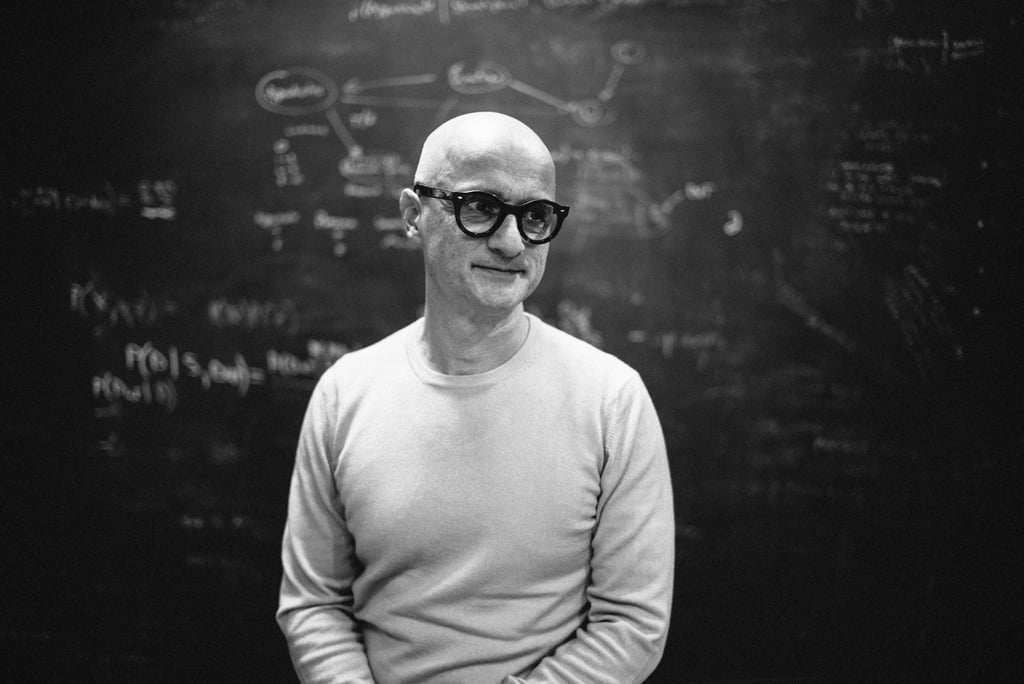
Ali Parsa, founder of Babylon Health, has created an extraordinary platform — an app-based service that cost-effectively connects top GPs with patients via their smartphones, and is the UK’s leading digital healthcare service.


Babylon allows its users to book a video consultation with a GP in minutes, or message with a photo to receive an answer for simpler questions. The true aim of the service is to leverage realtime data, adaptive health monitoring and clinically curated machine learning to detect diseases more quickly and ultimately prevent them before they happen.


Visiting him at his head office in London, we spoke about the future impact of AI on the provision of healthcare services, how data changes the way we think about wellness and why the digital delivery of medical advice will transform the lives of millions in the developing world.


Ali is a former investment banker at Goldman Sachs and Merrill Lynch. He previously created Circle, a multi-million pound business running private hospitals across Britain. He was named by the Times among the 100 global people to watch in 2012, and by HSJ among the 50 most influential people in UK healthcare.




CATEGORY: Technology, Healthcare

Creativity, comedy and why everyone is an artist, or at least should be

Posted by Mike Walsh

Oct 23, 2016 12:00:00 AM

Ron Tite.jpg


Ron Tite is a very funny guy — not to mention, a very creative one. Named one of the “Top 10 Creative Canadians” by Marketing Magazine, he’s been an award-winning advertising writer and creative director for some of the world’s most respected brands, including Air France, Evian, Hershey, Johnson & Johnson, Kraft, Intel, Microsoft, and Volvo.


Once a professional comedian, he now helps brands develop their content and storytelling strategy. Executive Producer & Host of the Canadian Comedy Award-winning show Monkey Toast, Ron is also a featured marketing expert on the new Mark Burnett-produced business reality show, Dream Funded.


His latest book, ‘Everyone’s An Artist (Or At Least They Should Be)’ explores why the most successful executives and entrepreneurs have learned to think like artists. We caught up in Toronto to talk about the power of reinvention, counterintuitive thinking and how comedy teaches you to rebel and break the rules.


CATEGORY: Innovation, Talent

Tech bubbles, status anxiety and the dynamics of wealthy families

Posted by Mike Walsh

Oct 16, 2016 12:00:00 AM

Eric Schoenberg-1


I had an interesting coffee with Eric Schoenberg in New York recently. He is an adjunct professor who teaches about family wealth at the Wharton School of the University of Pennsylvania, and also a member of a group known as the Patriotic Millionaires, who believe counter-intuitively, that he and other wealthy people, should be made to pay more tax. Facts like that twenty Americans own more wealth than half the population bother him, and are a reason why he believes that the US system is in need of reform. Eric saw first hand the effects of greed and wealth on human decision making. Having been involved in the first dotcom boom during the nineties at Broadview International, and the experience had led him to conducting research on the psychology of money and asset market bubbles. Since then he has taught behavioural economics and leadership at Columbia Business School, NYU's Stern School of Business, and the Haas Business School of the University of California at Berkeley. We reminisced about the strange digital tulip-mania of the late 90s, and why in the midst of a bubble people seem want to take on more risk even though they feel like they are making a lot of money.


CATEGORY: Customers, Financial Services

Memory hacking, algorithmic cruelty and why AI systems are better with imperfection

Posted by Mike Walsh

Oct 8, 2016 12:00:00 AM

Julia Shaw-1


Memory has also fascinated me - from the stories of the memory palaces of famous classical orators and artists, to the vast armada of 21st century tools that allow us to capture, process and share moments in our lives. In London for a few days, I met up with Dr Julia Shaw, who is a senior lecturer and researcher in the Department of Law and Social Sciences at London South Bank University. Author of "The Memory Illusion”, and a frequent speaker at technology conferences including a tedX event at Burning Man this year - she is more curiously known as a ‘memory hacker’. Julia’s research focuses on false memories, and in 2015 she published a study with Stephen Porter in which she succeeded to get 70% of the participants to falsely remember a crime from their past. Over a cup of tea in the lobby of the Edition Hotel, she explained the art of manipulating memory, how the way we remember things is shaped by modern technology and algorithms, and why AI designers are so interested in the imperfect nature of human cognition.


CATEGORY: Marketing, Leadership

Addiction, ludic loops and why smartphones are mobile ‘Skinner boxes’

Posted by Mike Walsh

Oct 2, 2016 12:00:00 AM

Natasha Schull


With every new connected device, messaging application or digital service that enters our lives - it becomes increasingly difficult to resist the seductive lure of technology on our attention. For Natasha Schull, a cultural anthropologist and associate professor in the Department of Media, Culture, and Communication at New York University, the addictive nature of devices, whether slot machines or smart phones, is no accident. In her recent book, ADDICTION BY DESIGN: Machine Gambling in Las Vegas, she explored the relationship between technology design and the experience of addiction. Her next book, KEEPING TRACK: Personal Informatics, Self-Regulation, and the Data-Driven Life concerns the rise of digital self-tracking technologies and the new modes of introspection and self-governance they engender. Meeting up in Soho, New York - we spoke about the nature of addiction and what makes the design of a particular technology so enthralling, the strange trance-like states that gamblers experience, the quantification of work and life, and why smartphones are a kind of ‘Skinner box’.


CATEGORY: Research, Customers