
The most important users of enterprise software are no longer human. For decades, the design and economics of enterprise technology have been built around a simple idea: a person logs in, navigates an interface, and performs a task. Revenue scales with the number of users, the time they spend inside the system, and the workflows they complete. That model has produced some of the most valuable companies in the world, from Salesforce to Workday to ServiceNow, and it has shaped how we think about productivity itself. That assumption is now under pressure.
I’ve been working on a project for the American Council of Engineering Companies on the future of the engineering firm, and one conversation in particular stood out. At Autodesk, a company at the center of the engineering technology stack, executives pointed to a striking shift. Among the most advanced architecture, engineering, and construction firms, the fastest-growing users of design software are not engineers, but agents. These digital counterparts interact directly with engineering tools through APIs, generating code, running simulations, and executing complex workflows without human intervention.
As one Autodesk executive described it to me, firms are effectively hiring “digital engineers” and training them to operate inside their systems. What looks like a usage anomaly is, in fact, an early indicator of a broader shift: when the fastest-growing users of a system are non-human, the underlying economics of the platform begin to invert. When agents drive activity, pricing based on human seats starts to break down. Autodesk and its customers are already exploring usage models tied to computational work and outcomes rather than access.
This pattern is spreading quickly. Across customer service, finance, HR, and operations, a growing share of work is now handled by AI agents that never log in, never appear on a dashboard, and never occupy a seat license. They operate through APIs, event streams, and permissions systems, responding to signals and acting in real time. Pricing is shifting accordingly. Salesforce is experimenting with action-based pricing, charging per autonomous action in some contexts. Microsoft meters Copilot usage through credits tied to computational work. Zendesk and Intercom price based on resolutions. HubSpot charges for qualified leads and completed conversations.
The unit of value is moving from the user to the outcome. And once that shift happens, the entire logic of SaaS begins to unravel. Seats measure access. Outcomes measure work. Those are not interchangeable.
ServiceNow’s Q1 2026 results show this transition in action. More than half of its net-new business now comes from non-seat-based pricing, including usage tokens and connectors, alongside traditional subscription contracts. Management has also elevated its AI-specific revenue commitment, with its Now Assist suite tracking toward roughly $1.5 billion in annual contract value in 2026 as customers expand beyond seat-based deployment.
This is the beginning of what can be described as headless SaaS.
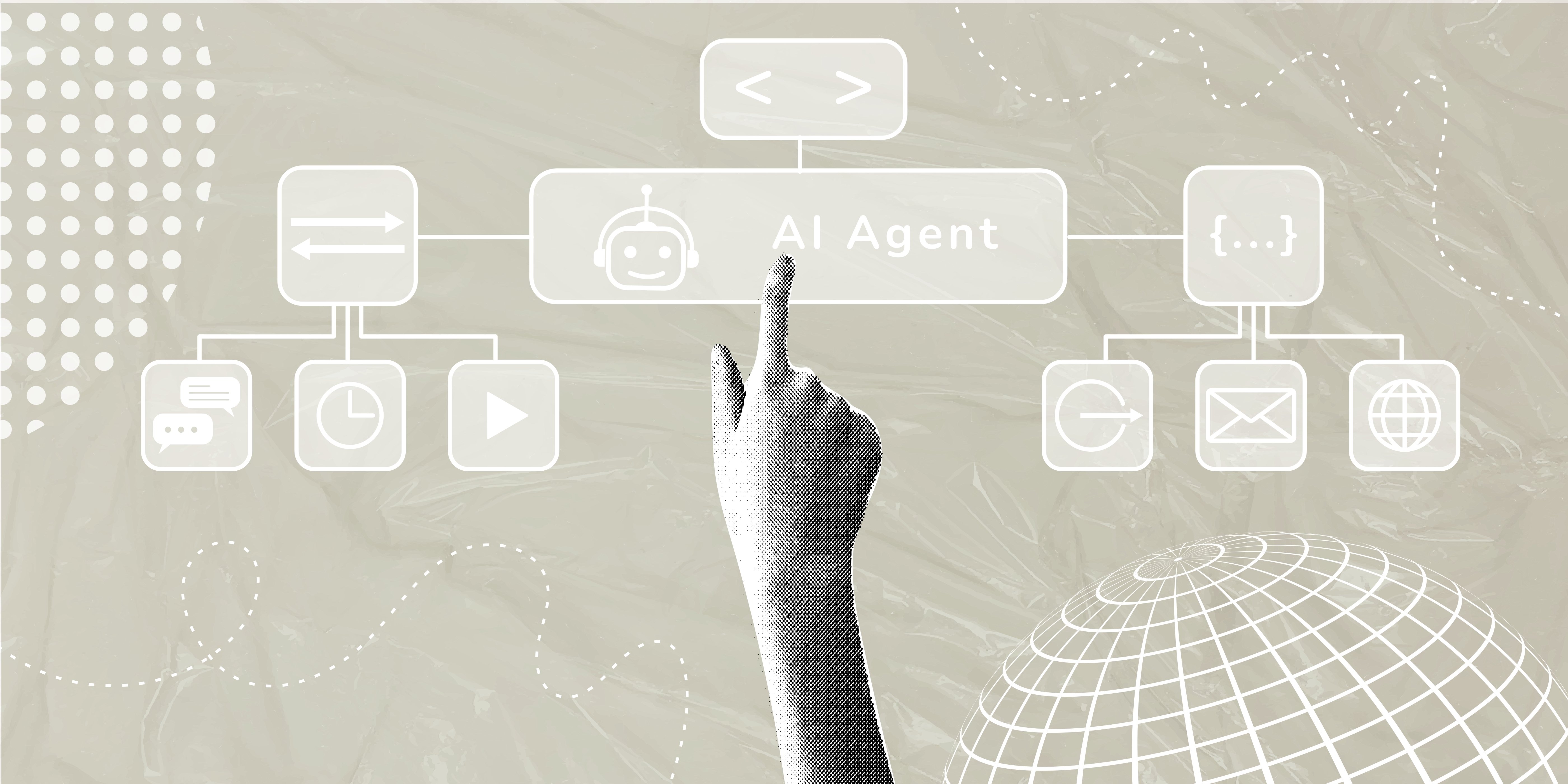
Headless SaaS is software designed for execution rather than interaction. The interface remains, but it is no longer where value is created. Work happens through execution. Systems expose capabilities as actions that can be invoked programmatically by agents, triggered by events, and governed by policy. Humans remain involved, though their role shifts toward supervision, exception handling, and boundary setting. Software becomes less of a workspace and more of an active participant in getting work done.
The largest vendors are already reorganizing around this reality. Salesforce has introduced Agentforce to enable autonomous execution. Microsoft has expanded Copilot Studio and Azure AI Foundry into platforms for orchestrating agents across systems. ServiceNow has built an AI Control Tower to monitor and govern agent activity. Workday has defined an “Agent System of Record” to track digital workers alongside human employees. Oracle and SAP are embedding agent capabilities directly into their core applications.
Taken together, these moves signal a deeper architectural shift. Enterprise software is being rebuilt around an execution layer that runs continuously. Systems of record provide state. Action layers define what can be done. Orchestration engines coordinate activity. Identity and policy frameworks constrain behavior. Observability tools track performance, risk, and cost. The system no longer waits for a user. It operates by default.
In effect, the enterprise is being reassembled not as a set of workflows, but as a system of decisions that execute continuously.
This shift is economic as much as technical. Enterprise AI spending already reflects this transition. Estimates suggest roughly $37 billion in enterprise AI spend in 2025, with nearly half flowing to application-layer systems that execute work directly. AI-native companies are reaching $100 million in revenue faster than any previous generation of SaaS.
These signals point to a deeper shift in where value is created. The real question is no longer how software is sold. It is who controls the work, and more importantly, who controls the decisions that define that work.
For the past two decades, enterprise systems have excelled at two things. They store the state of the business, and they execute transactions reliably. A CRM records the customer. An ERP records the order. A service platform records the ticket. These systems answer with precision what is true and what just happened. What they have not owned is the decision about what should happen next. That gap is now becoming the most valuable layer in the enterprise.
As agents become more capable, they do more than execute predefined steps. They interpret situations. They decide whether to escalate a case, how to price a deal, which supplier to select, or how to route work across a network. To do this effectively, they require more than data. They require context.
Context is not a dashboard or a dataset. It is the operating system of decision-making. It is the assembled understanding of a situation at the moment of action, combining signals from multiple systems, historical patterns, constraints, objectives, and risk thresholds. This contextual scaffolding determines how an organization interprets reality and what actions it considers possible. Control over context translates directly into control over decisions.
Right now, no single player fully owns this layer. Each part of the stack holds a piece of the puzzle, but none owns the complete decision loop. Application vendors control structured data. Hyperscalers control compute and orchestration. Data platforms aggregate signals. But the logic that turns context into action remains fragmented.
As a result, a new layer is emerging inside organizations. Teams are stitching together systems that pull context from multiple sources, reason across them, and act back into each platform. Agents increasingly sit above applications rather than inside them, treating enterprise systems as interchangeable components in a larger decision engine. Decisions begin to move outside traditional SaaS boundaries. What appears to be automation is, in practice, the early formation of a distributed decision architecture.
This shift has immediate consequences. It accelerates transformation by allowing organizations to target high-leverage decisions rather than redesign entire workflows. A pricing decision can be optimized independently of the broader sales process. A routing decision can be improved without rewriting the entire supply chain. These interventions compound, gradually reshaping how the system behaves.
It also redistributes control. When decisions are made outside core systems, those systems become infrastructure rather than control points. They still hold data and execute transactions, but they no longer determine how the organization thinks. That logic moves to the layer where context is assembled and decisions are made.
This is why the repricing of SaaS is only the first signal. Investors are beginning to recognize a deeper risk: ownership of systems of record does not guarantee control if decision-making migrates elsewhere. The most valuable layer in the enterprise may no longer sit inside SaaS at all. The next phase of competition will center on who controls context, who defines decision rights, and who captures value at the moment of action.
Every layer of the technology stack is now moving toward that prize. Application vendors are embedding AI into their products to retain control. Hyperscalers are building agent platforms that operate across systems. Data platforms are expanding into real-time decisioning. Enterprises, often with the help of integrators, are constructing their own decision layers that bypass any single vendor.
What is emerging is a scramble to control the decision layer of the enterprise.
There are real challenges ahead. Security becomes more complex when non-human actors initiate actions across systems. Data quality becomes more critical as errors propagate at machine speed. The economics of AI introduce new cost structures that differ from traditional SaaS. Organizations must also rethink how they manage a workforce that now includes both humans and machines.
Even so, the direction is clear. Enterprise software is moving toward continuous execution. The number of users matters less than the volume and impact of work performed. The value of a platform is measured by how many decisions it influences and how effectively those decisions translate into outcomes.
The companies that win will not be those with the most features or the largest user base. They will be the ones that control how context is assembled, how decisions are made, and how actions are executed across the enterprise. Because in the end, the future of enterprise software will not be defined by who owns the workflow.
It will be defined by who shapes the decision.
